
Processes along the entire value chain were improved in the year under review; advanced technologies such as AI were integrated, and development and production capabilities were expanded. Connections within the international manufacturing network have been significantly improved in order to leverage synergies and sustainably strengthen global competitiveness.
EC engines made by STIHL
In the 2025 fiscal year, the STIHL Group took a significant step toward strengthening the battery segment by beginning in-house production of EC engines. This decision increases independence from external supply chains, creates cost advantages and unique technological selling points, and contributes to the manufacturing depth of battery-powered products.
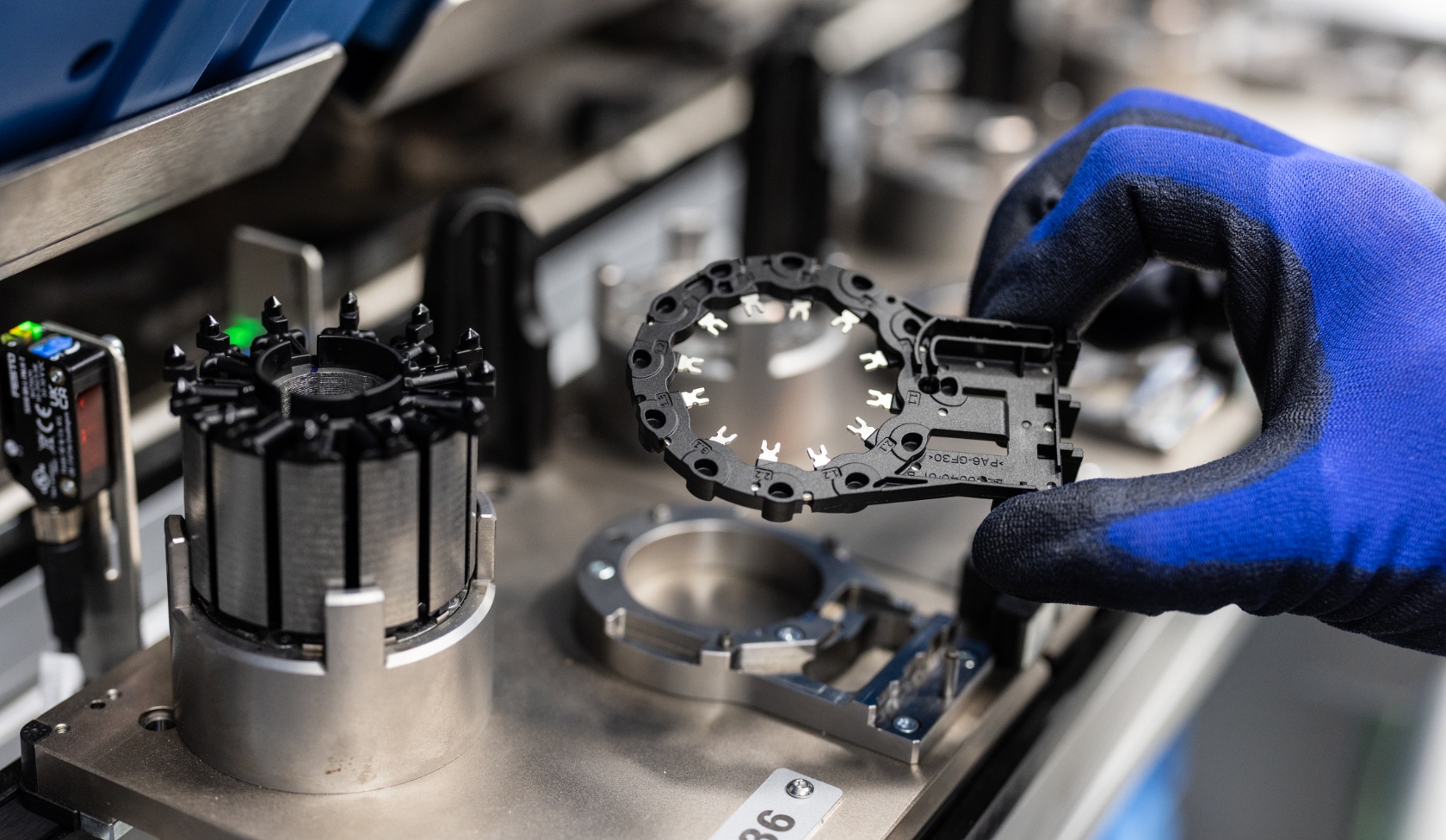
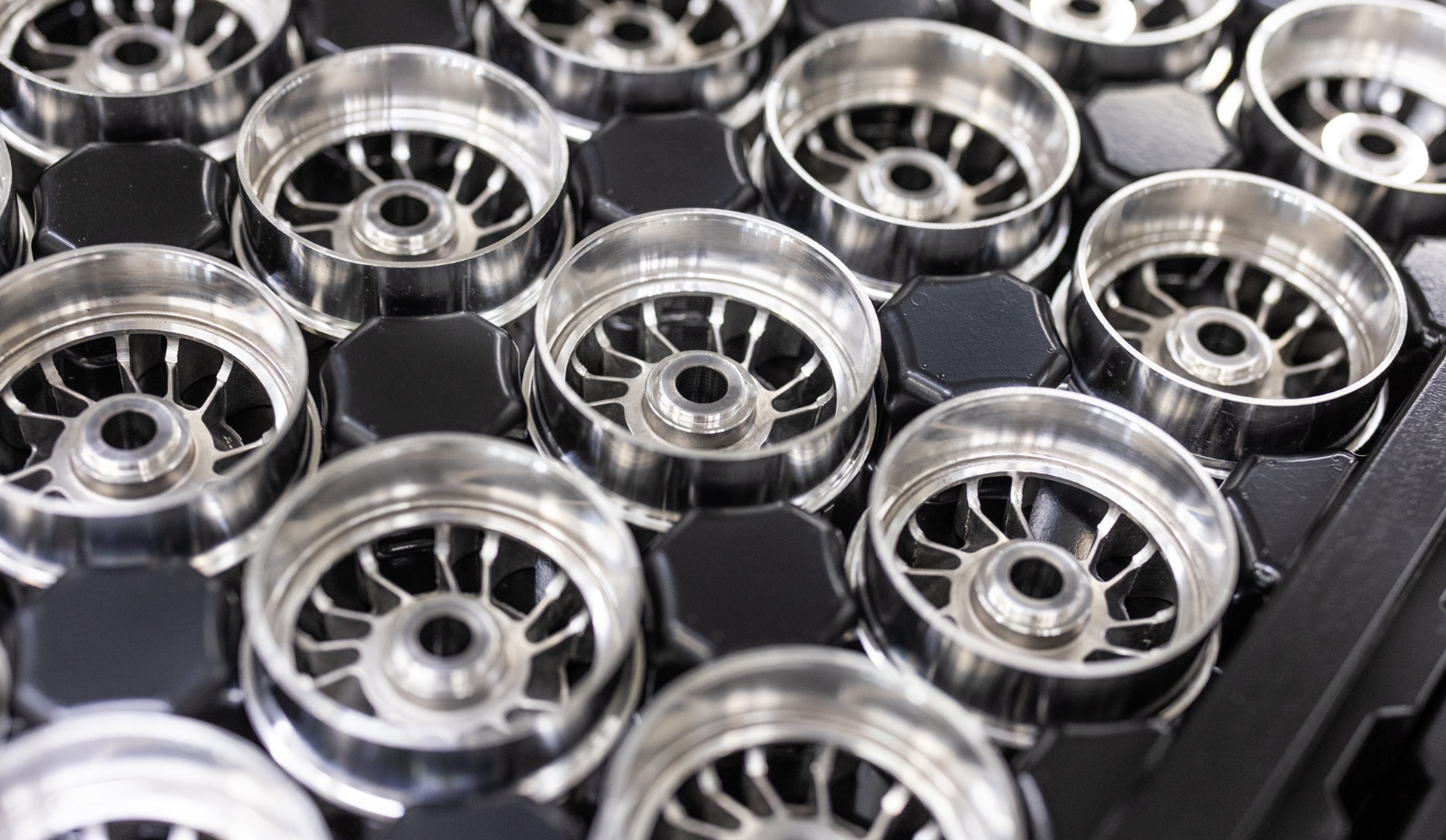
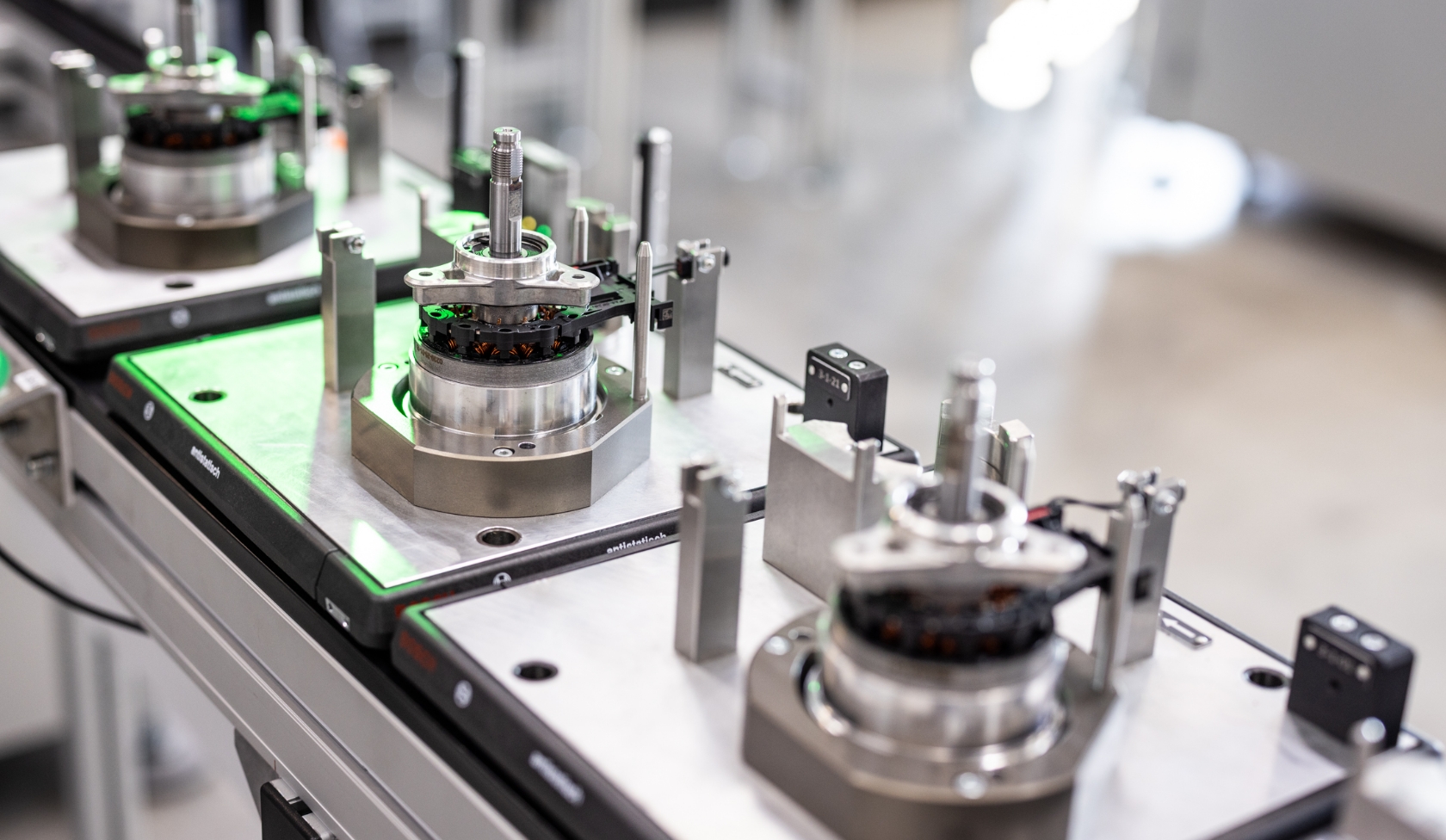
At the core of the implementation is a fully linked, highly automated production system, which makes assembly of an EC motor module possible. The initial test phases of the new production line were successful. Starting in 2026, high-performance motors for professional battery-powered tools will be produced using state-of-the-art systems in Waiblingen.
The three main stages of the new production line:
Matrix assembly
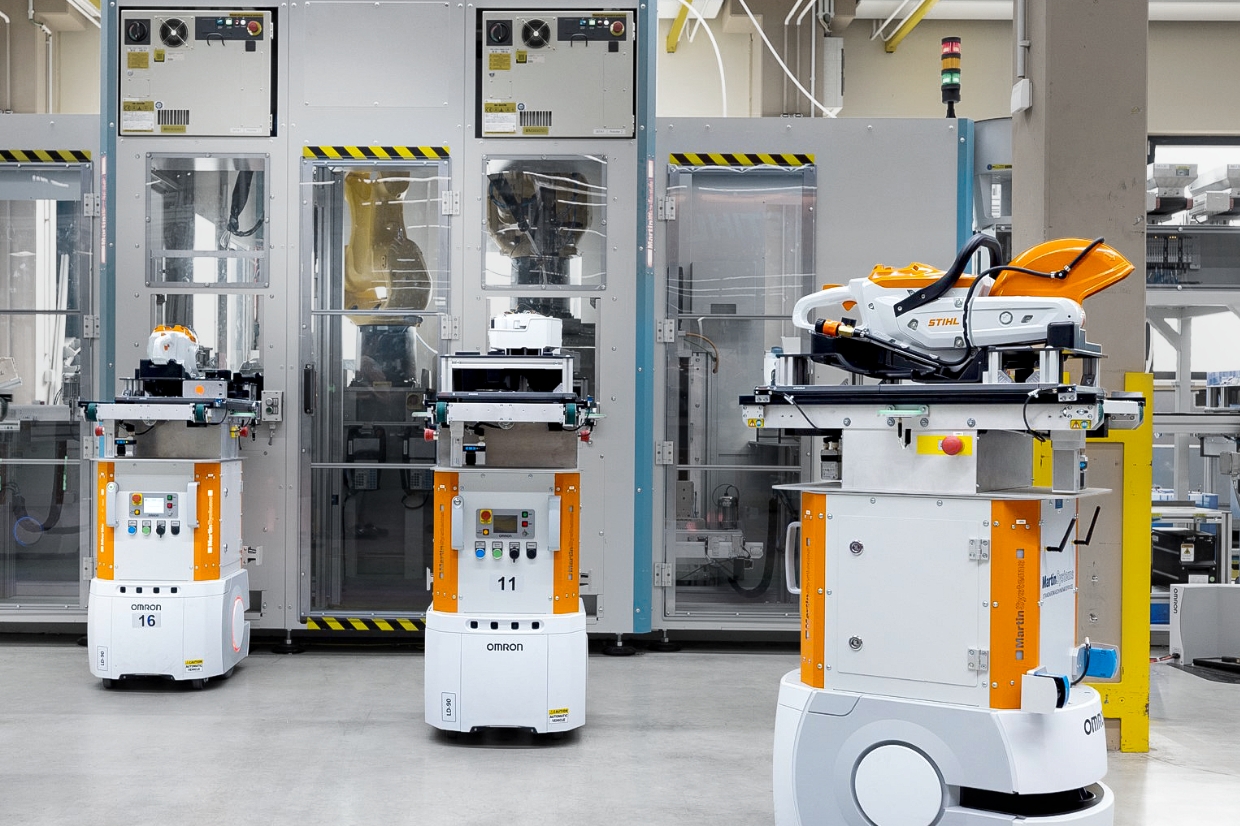
The new STIHL TSA 300 battery cut-off machine is the first professional battery-powered product manufactured by STIHL using a state-of-the-art, flexible matrix assembly. This structure replaces the classic assembly line with a driverless transport system for a loose arrangement of workstations and automatic stations. This approach means a range of products can be assembled without needing manual conversion. Combining manual assembly and flexible automated processes increases adaptability – a decisive advantage in times of volatile markets.
Digital production processes with SPOM
In the year under review, the Group has continued the rollout of STIHL Production Operation Management (SPOM), an internally developed platform that bundles central applications such as production control, digital maintenance, checklists, action management, and packaging management into one implementation model. This leads to simplified operation, lower error rates, and overall more efficient processes.
SPOM is closely linked to the central ERP system powered by S/4HANA and supports global processes as well as processes in production and workshops. The platform will be gradually introduced at all production locations and forms the basis for a globally uniform, networked smart factory that makes best use of the strengths of the individual locations.
Initial results observed in Switzerland are positive: SPOM has significantly reduced manual work steps such as oil removal and tooth grinding. Productivity is increasing, while employees are relieved of repetitive tasks. Because of these benefits, SPOM is a key building block for the future efficiency of production.
New assembly line and injection-molding plant in Brazil
In summer 2025, STIHL Brazil commissioned a new assembly line for blowers and sprayers, which will increase production output by up to 28 percent in two-shift operation and is expected to be capable of manufacturing up to 100,000 units per year. The modular and flexible line allows efficient conversion to various models and reduces implementation costs.
At the same time, international cooperation in toolmaking was strengthened: STIHL Brazil and the STIHL magnesium die-casting plant in the Eifel region jointly developed a complex magnesium injection-molding tool that increases precision and efficiency. This strengthens the expansion of production capacities as well as STIHL’s competitiveness in the region and enables faster response to market requirements. The combination of modern production technology and international cooperation promotes knowledge exchange across the Group and supports the continuous further development of products and processes.
AI in production
Since 2025, STIHL production companies have been using AI-powered applications to make production and maintenance processes more efficient, reliable, and error-free. The individual technologies interact in a targeted manner and form an integrated system for process optimization.
The chain plant in Switzerland provides an illustrative example: An AI model automatically detects faulty riveted joints, speeding up quality inspection and reducing wastage in the process. Based on this data, the digital assistant SIA (STIHL Info Agent) links various sources, improves information management, and prevents knowledge gaps. AI-powered analysis additionally identifies patterns and deviations in quality data so that production processes can be continuously optimized.
AI applications are also networked within maintenance processes: Predictive monitoring detects potential malfunctions early and minimizes unplanned downtime. Online monitoring provides up-to-date technical information at all times, while a chatbot standardizes maintenance processes and thereby sustainably increases system availability.