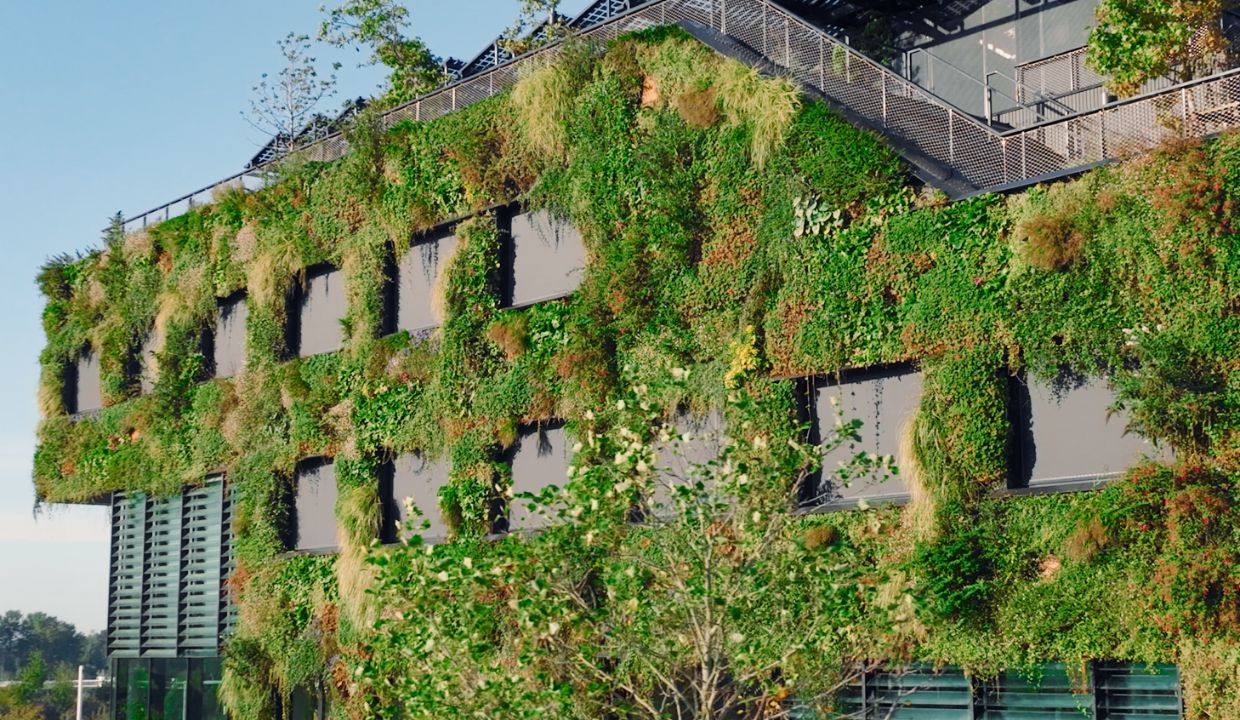
Green belt
The area surrounding the new plant has been designed as a series of natural spaces. A small woodland of mirabelle trees has been preserved, and around 250 additional trees were planted. The roofs of the buildings have also been greened.
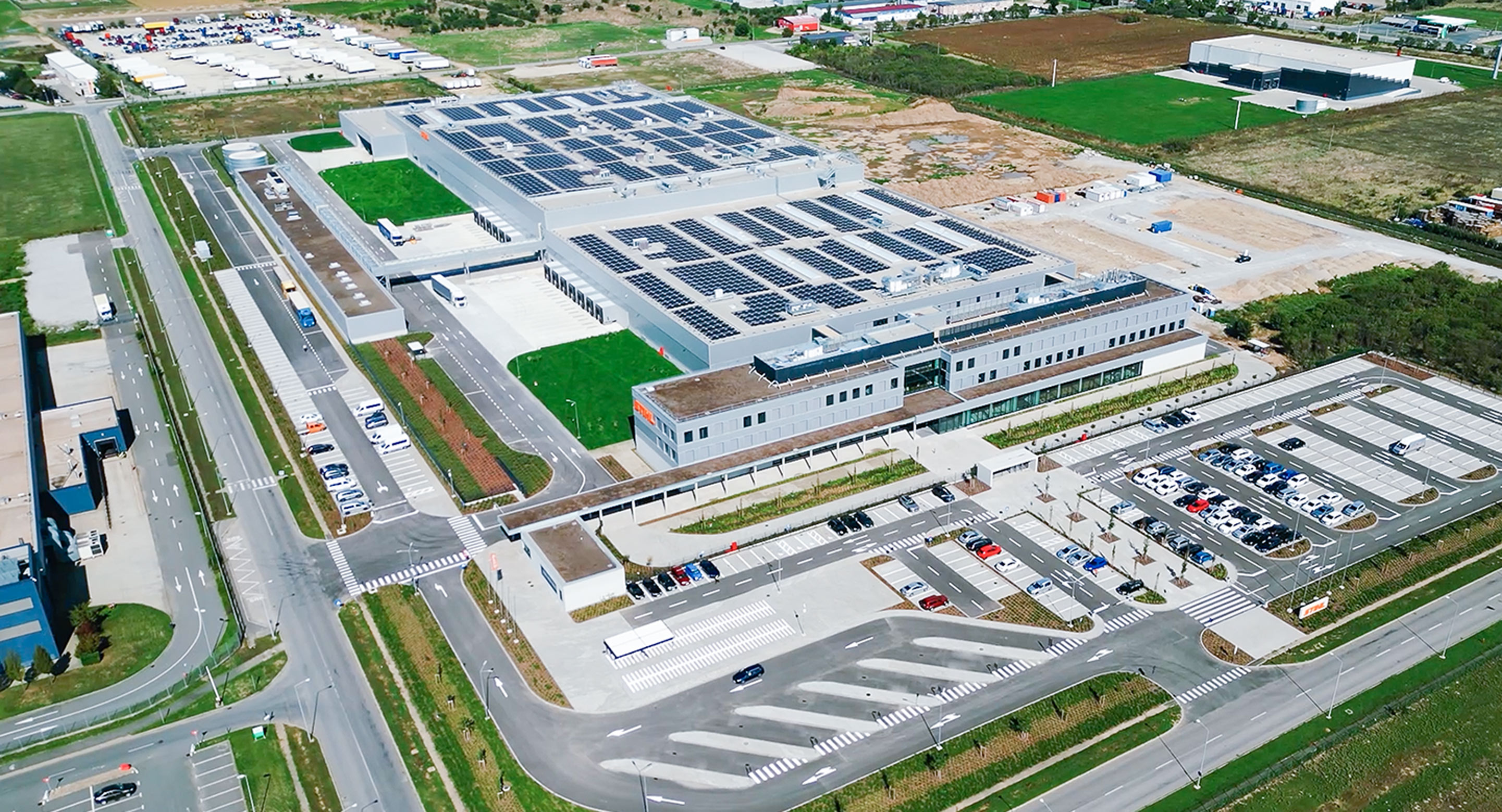
An individual plant for the exclusive manufacture of battery packs and battery-powered tools: The new STIHL production company in Romania is a clear signal of our strategic shift toward battery technology. It was dedicated in October 2025 and is primarily intended to meet the growing demand for battery products in the European market.
The new plant in Oradea serves as the STIHL Group’s European battery excellence center: By 2028, its annual production is expected to reach 1.7 million battery-powered tools and 1.8 million battery packs.
Blowers and AP battery packs are currently on the production line, with garden pruners, chainsaws, and other products set to be added in the future.
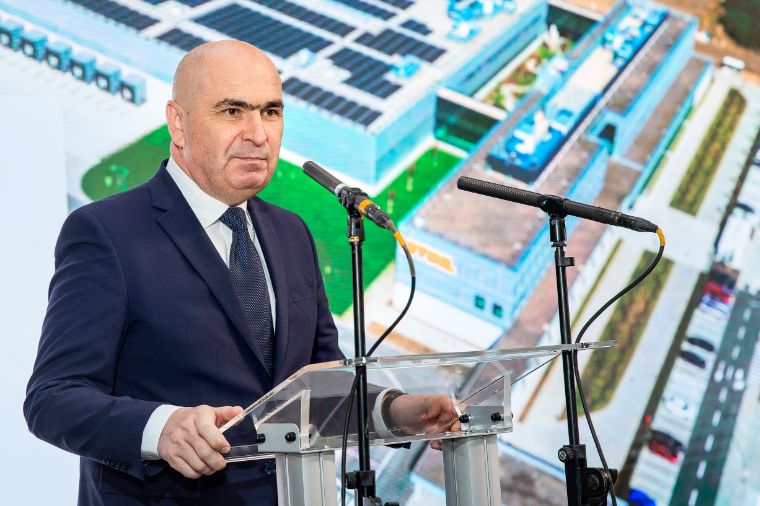
“This investment represents jobs, cutting-edge technology and a real transfer of know-how.”
Ilie Bolojan Prime Minister of Romania
In the university city near the Hungarian border, conditions for investors are ideal: Excellent logistics connections and modern infrastructure speak in favor of Oradea, and both the city and regional authorities actively support large-scale projects. When Mayor Florin-Alin Birta spoke at the plant dedication, he emphasized openness to innovation, performance orientation, and international cooperation: “The Oradea City Hall consistently supports investments that bring added value to the community, aware that a dynamic economic environment is the engine of prosperity.” Prime Minister Ilie Bolojan sees the investment by the STIHL Group as a strong signal that Romania is a reliable partner and a competitive industrial location.
Seven hundred people are expected to find employment at the new plant by 2028. The conditions for this are excellent, as the local university offers courses in fields such as engineering and international business.
“I have had the best experiences with geothermal energy. That’s why I’m particularly pleased that we were able to implement it in a major project here.”
Hubert Kieweg Architect and construction project manager
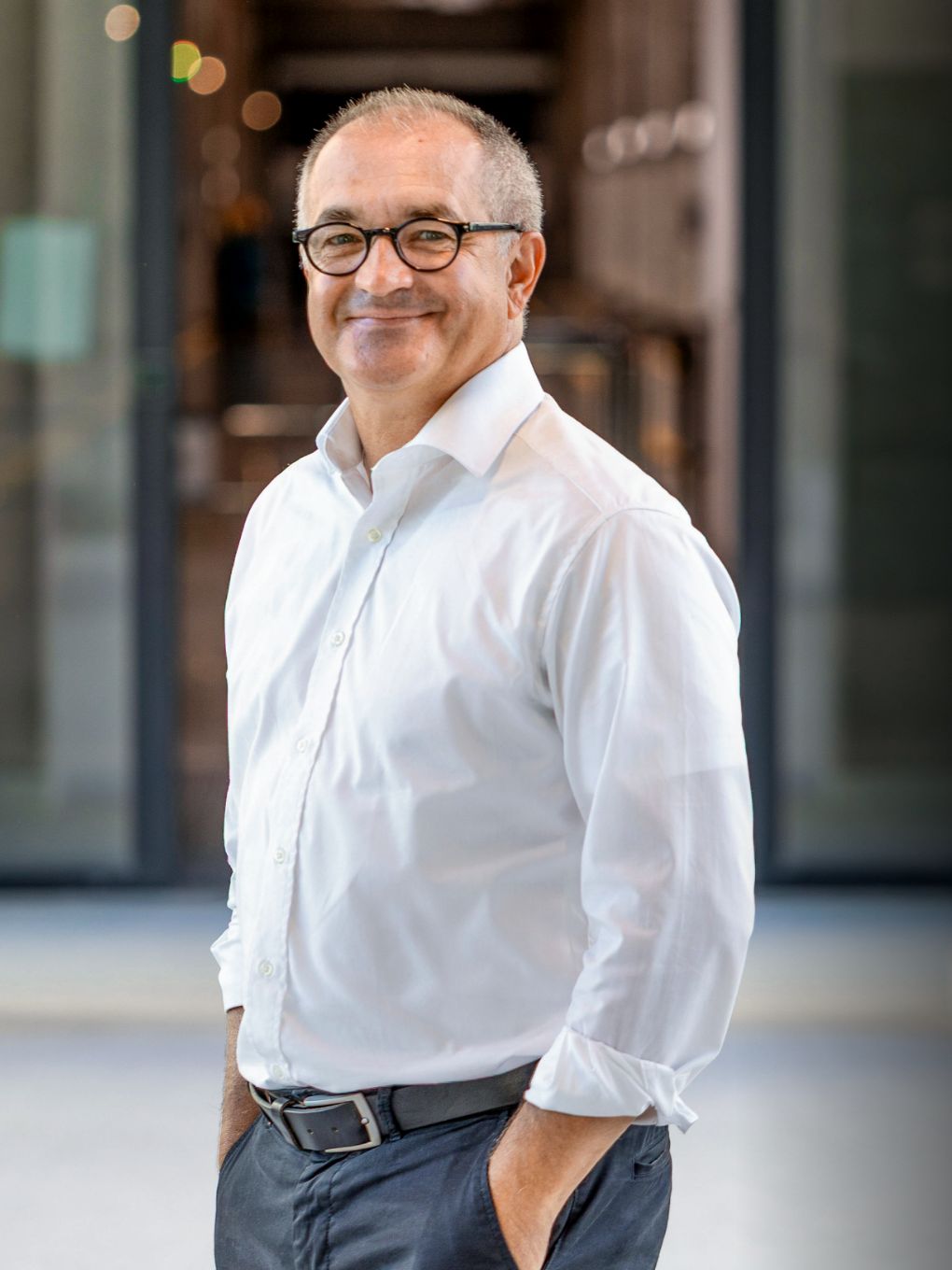
As an architect in STIHL’s Construction department, Hubert Kieweg had a special task in Oradea: As well as being responsible for the construction of all buildings and infrastructure at the new site, he was also tasked with making it the first STIHL production plant to be certified according to the demanding criteria of the German Sustainable Building Association (DGNB).The ambitious target: Gold certification level.
The DGNB assesses the ecological, economic, and sociocultural aspects of the finished building and also closely examines the entire construction process. For Hubert and his project team, this meant the construction site had to be organized in such a way that as little waste as possible was generated and noise and dust were reduced to a minimum.
The certification additionally covers the entire life cycle, including future dismantling. This is reflected in the new office building: The facade is made from wooden frames equipped with cladding for fire protection. Metal cladding was deliberately chosen for this because it is highly recyclable. The mineral wool layer was also not glued as is standard but instead fixed with a clamping mechanism. Hubert Kieweg says, “We have designed it so that future generations can completely dismantle not only the office building, but all the facades and roofs.” This is a building concept that does much more than just meet the needs of the present moment.