

As a global, family-owned business with a long-term perspective, the STIHL Group focuses its actions on consistently integrating ecological responsibility, social standards, and good corporate governance. Sustainability has been an integral part of the corporate strategy since 2021 and shapes key investment and development decisions.
Governance and control
Responsibility for sustainability rests with the highest level of management. The STIHL AG Executive Board bears overall responsibility for implementing the corporate and sustainability strategy. The Advisory Board and Supervisory Board strategically support and monitor this alignment, as well as ensuring compliance with regulatory requirements. Operational coordination is managed by the Group-wide Sustainability Officer and the Sustainability Steering Committee. Operational implementation of all sustainability measures is the responsibility of the specialized departments.
In 2025, the Executive Board, Advisory Board, and Supervisory Board addressed the further development of the sustainability strategy, regulatory requirements such as the EU Battery Regulation and Packaging Regulation, and progress on climate protection and the circular economy, among other topics.
Strategy, business model, and value creation
At the STIHL Group, sustainability is integrated throughout the entire value chain. The sustainability strategy maps key topics into designated modules, grouping them into three strategic focus areas:
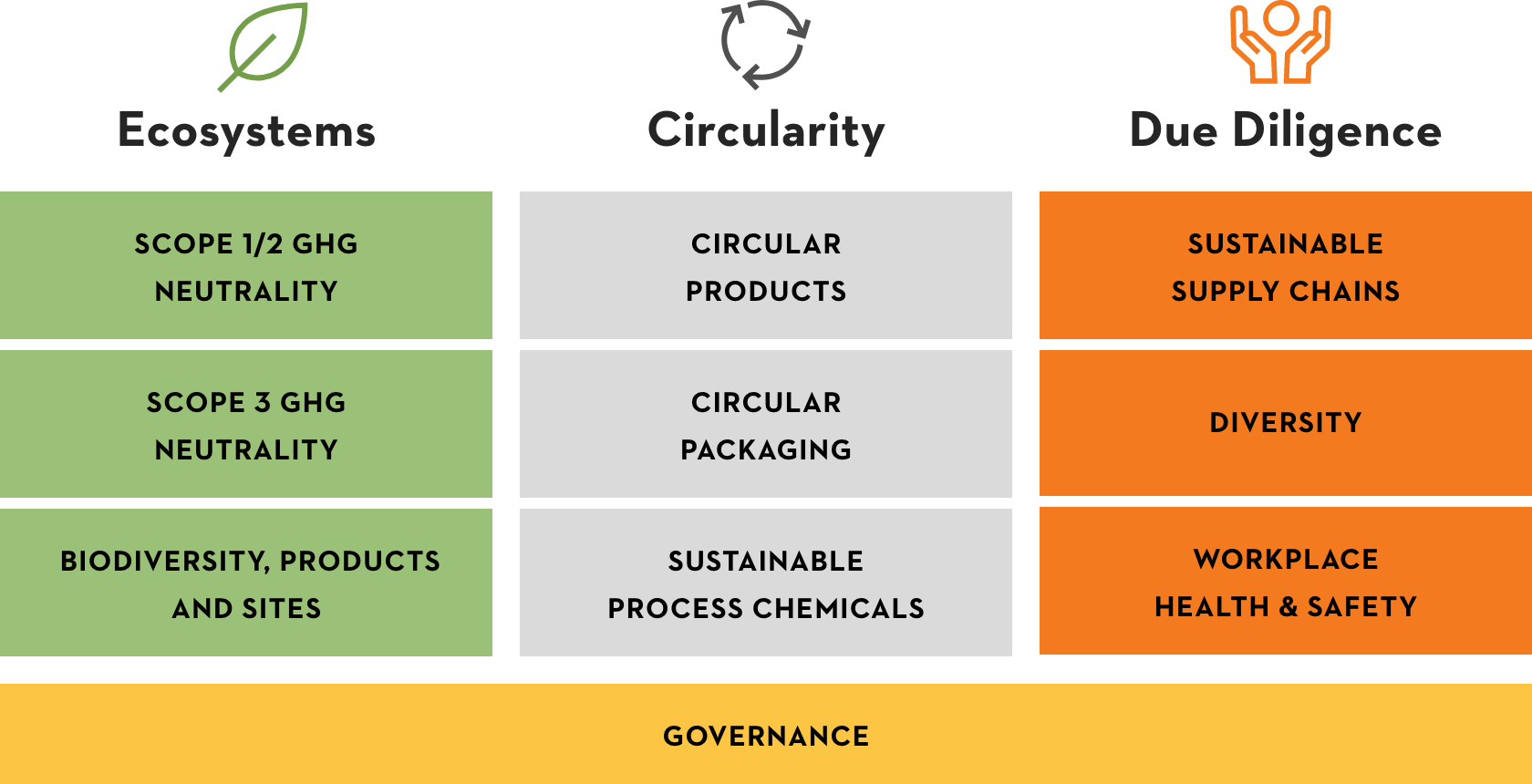
Aligned with the ESRS requirements, the STIHL Group also updated the double materiality analysis on sustainability topics during the reporting year: It considers both the impact of business activities on the environment and society (impact materiality) and the financial risks and opportunities arising for the business (financial materiality). The results of this analysis confirm the focus areas of the STIHL sustainability strategy.
- Climate change adaptation
- Climate change mitigation
- Energy
- Pollution of air
- Pollution of water
- Pollution of soil
- Pollution of living organisms and food resources
- Substances of concern
- Substances of very high concern
- Microplastic
- Water
- Marine resources
- Direct impact drivers of biodiversity loss
- Impacts on the state of species
- Impacts on the extent and condition of ecosystems
- Impacts and dependencies on ecosystem services
- Resource inflows, including resource use
- Resource outflows related to products and services
- Waste
- Working conditions (own workforce)
- Equal treatment and opportunities for all (own workforce)
- Other work-related rights
- Working conditions (workers in the value chain)
- Equal treatment and opportunities for all (workers in the value chain)
- Other work-related rights
- Communities’ economic, social and cultural rights
- Communities civil and political rights
- Rights of indigenous peoples
- Information-related impacts for consumers and/or end-users
- Personal safety of consumers and/or end-users
- Social inclusion of consumers and/or end-users
- Corporate culture
- Protection of whistleblowers
- Animal welfare
- Political engagement
- Management of relationships with suppliers including payment practices
- Corruption and bribery
This chapter is an excerpt from the voluntary sustainability statement that the STIHL Group submitted for the first time in accordance with the European Sustainability Reporting Standards (ESRS) for the 2025 financial year.
Download full sustainability statement