

Climate change affects the STIHL Group in several ways: through increasing regulatory requirements, the energy demands of production, and, primarily, product usage. At the same time, demand is shifting – specifically toward low-emission and battery-powered equipment. Addressing climate change is therefore closely linked to STIHL’s technological advancement, competitiveness, and long-term strategic direction.
Energy transition
We intend to reduce our use of fossil fuels by 40 percent by 2030, using 2019 as the base year. To this end, we are continuing to switch our energy supply, electrify production processes, introduce energy metering systems, and increase energy efficiency. In the reporting year, renewable sources made up 61 percent of the Group’s total energy consumption of 514,399 megawatt hours (MWh). With the exception of one site, all global production facilities sourced their electricity from renewable generation. The transition of the remaining site is scheduled to take place in 2026.
Switching away from natural gas in Brazil
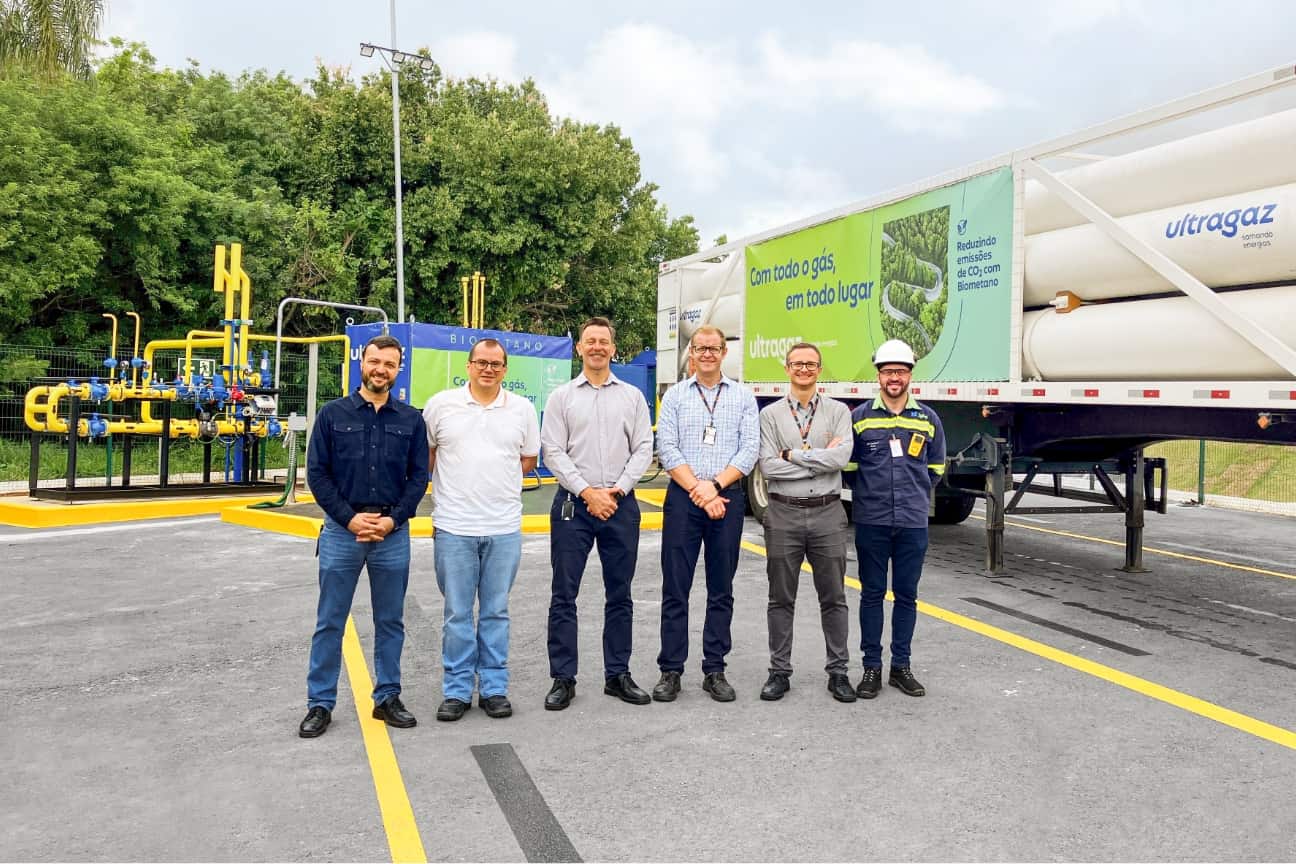
The STIHL company in Brazil took a major step toward decarbonizing its energy supply in October 2025: Since then, the site in São Leopoldo has no longer been supplied with natural gas, but with biomethane from a local energy company. Thanks to the transition, STIHL Brazil is able to reduce emissions by 4,000 metric tons of CO2e per year – and will be the first STIHL company to not only achieve but also exceed the reduction target for fossil energy consumption (−40 percent in 2030 compared to 2019). Biomethane is a renewable energy source produced from organic waste, for example in landfills.
The expansion of electricity generation from renewable sources at STIHL Group sites advanced further in 2025: With annual production of 11,148 MWh, STIHL generated approximately 3 percent of its total electricity consumption on site. Overall, STIHL’s Scope 1 fossil energy consumption was 8 percent below the 2019 reference year.
Waste heat from adjacent facility
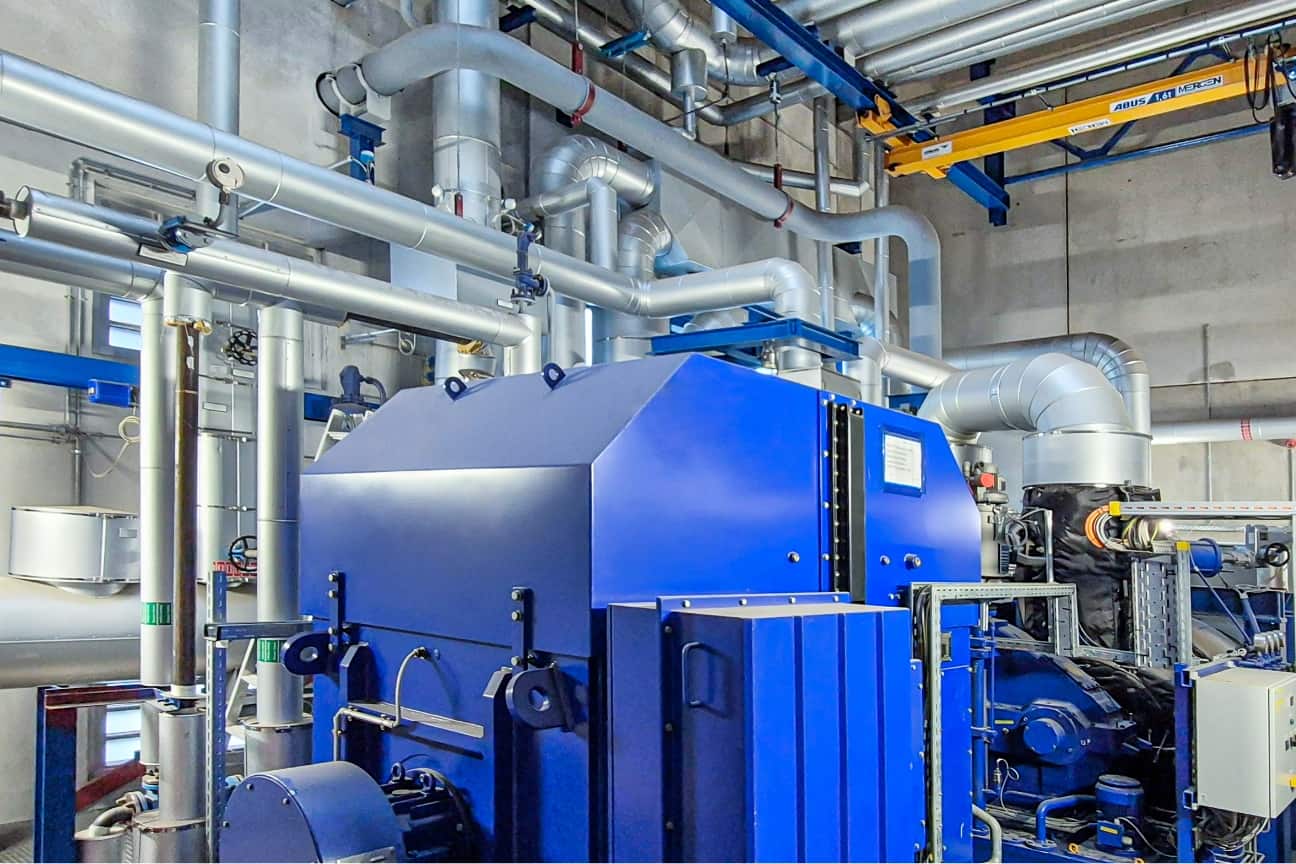
Sustainable neighborly support: Since this reporting year, the STIHL magnesium die-casting plant in Weinsheim has been using a portion of the waste heat from a neighboring door manufacturer. Heat from the incineration of waste wood is now transferred to the plant via a pipeline instead of being released into the atmosphere through cooling towers. The plant in Weinsheim uses this to heat buildings and a pretreatment system for powder coating. This saves approximately 2.2 million kWh of natural gas per year and reduces its CO2 emissions by 4,500 metric tons.
STIHL emission targets are validated
In October 2025, the Science Based Targets initiative (SBTi) independently validated STIHL’s climate targets: The STIHL Group is committed to reducing absolute Scope 1 and Scope 2 greenhouse gas (GHG) emissions by 68 percent by 2034, compared to the 2021 base year. Additionally, emissions across the value chain (Scope 3) are set to be reduced by 35 percent by 2034 compared to the 2022 base year. To achieve the Scope 1 and 2 targets, specific emission reduction measures have been planned. SBTi-compliant reduction pathways have also been established for Scope 3, which are binding for all relevant business areas across the value chain.
In the reporting year, STIHL’s GHG emissions totaled 40,087 metric tons of CO2e in Scope 1, 17,107 metric tons of CO2e in Scope 2 (market-based), and 7,620,165 metric tons of CO2e across the relevant Scope 3 categories.
Investing in energy efficiency and climate protection
In 2025, the STIHL Group invested approximately 3.5 million euros in energy efficiency, electrification, and energy monitoring. These investments help us to reduce emissions sustainably and manage energy use more transparently.
A large portion of the market-based Scope 1 and 2 emissions from the 2025 reporting year will be offset in the second quarter of 2026 by retiring previously purchased emission reduction certificates from Gold Standard climate protection projects. An additional contribution to climate protection comes from carbon storage through externally verified reforestation projects in Uganda and Borneo. In 2025, through reforestation and agroforestry projects in cooperation with Fairventures and TREEO, the STIHL Group permanently sequestered a total of 5,667 metric tons of CO2e in biomass. STIHL will continue this partnership over the long term.
Reforestation in Romania
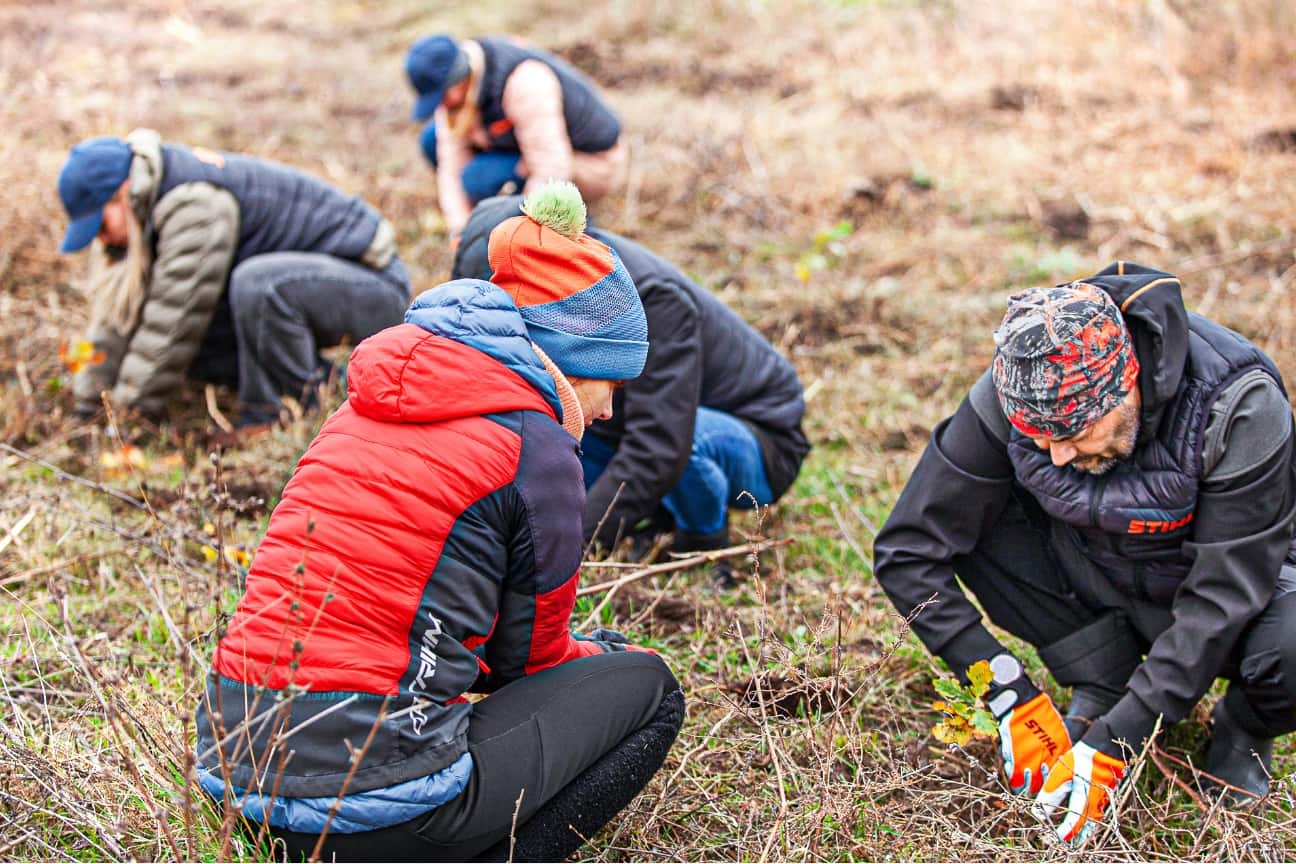
STIHL Romania participated in a major reforestation campaign in November 2025: Over several days, 30,000 seedlings of native tree species – including acacia, willow, and white poplar – were planted across six hectares of degraded land. Of these seedlings, 1,500 are set to grow into a “STIHL forest.” The young trees stabilize the soil, prevent erosion, and help restore the natural balance in Braila County, in southeastern Romania. The resulting forest will be carefully monitored over the next three years to ensure healthy growth of the seedlings. The planting is part of a long-term partnership between STIHL Romania and a nationwide reforestation initiative.
Continued expansion of the battery range
The vast majority of the STIHL Group’s GHG emissions occur during the product use phase. We have therefore set the strategic goal of ensuring that at least 80 percent of all new tools sold by 2035 are battery-powered. To this end, we continued to expand our battery-powered product portfolio in 2025: New production capacities commenced operations, and more battery-powered tools were introduced to the market, particularly for professional use.
At the same time, we are working to further advance existing technologies. This includes more efficient engines, alternative fuels, and materials with a lower climate impact.
Environmental pollution
As a manufacturer of technical products, STIHL uses chemicals whose use can impact the environment and human health. Global requirements for product safety, substance bans, and material transparency are increasing and have a direct impact on development, production, and the supply chain. Responsible handling of these substances is therefore a prerequisite for regulatory compliance and market access.
Clear rules for materials and chemicals
STIHL is implementing measures to gradually replace or reduce substances of very high concern (SVHCs) in its products and production processes. To further improve the data and decision-making basis for production measures and targets, we are currently working on a harmonized system for hazardous substance management. This initiative facilitates the collection, classification, and reporting of SVHCs in accordance with the EU REACH Regulation across the entire value chain. Specifically, this includes the integration of more detailed supplier data and training of the relevant departments.
In 2025, we also adopted an action plan to phase out SVHCs in production. All relevant substances were collected, evaluated, and prioritized for phased replacement. A specially developed hazardous substance indicator is currently being piloted in some production areas.
Greater transparency in the supply chain
The STIHL Group has also defined clear requirements for its collaboration with suppliers. A Group-wide standard regulates the use of critical substances and is more restrictive than the applicable legal requirements for certain substance groups. Suppliers are required to provide the relevant information and comply with defined requirements.
These measures help us to identify risks early and gradually reduce the use of potentially critical substances across the value chain. STIHL aims to phase out the use of SVHCs in its products, as far as technically possible.
Biodiversity and ecosystems
STIHL products are used in nature. Intact ecosystems and the protection of biodiversity are therefore intrinsically linked to product responsibility and the sustainability of the STIHL business model.
Foundations for improved internal management
In 2025, the STIHL founding company established key requirements for a more systematic approach to biodiversity aspects in its future internal operations: A new set of guidelines supports locations worldwide in better identifying the impact of their production activities on ecosystems and deriving suitable countermeasures.
In this context, we have begun developing a centralized system to record and assess each individual site. It provides a uniform data basis and help us to better understand local ecosystem contexts and plan projects in a more targeted manner.
Promoting responsible use
Externally, our focus on biodiversity and ecosystems is meant to help ensure that customers use STIHL products responsibly. Consequently, we continued our collaboration with scientific and public-sector partners during the reporting year, while expanding our training and information materials for our sales teams, customers, and the general public.
Resource use and circular economy
Expectations for the responsible use of resources as well as long-lasting, repairable, and recyclable products are continuously increasing. Efficient use of resources therefore reduces environmental impacts, strengthens security of supply, and supports long-term competitiveness.
Less material, better circularity
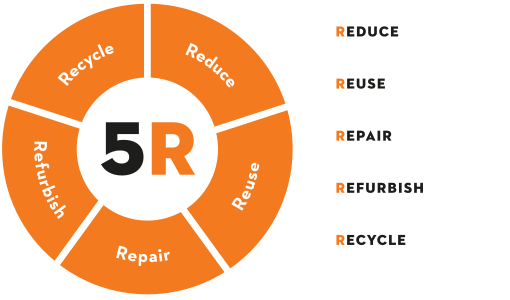
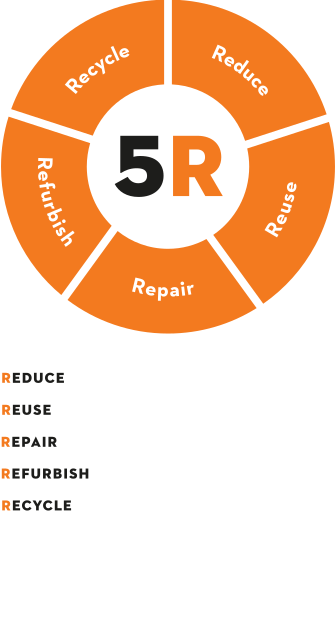
The STIHL Group aligns its product development and material usage with the 5 Rs: the principles of Reduce, Reuse, Repair, Refurbish, and Recycle. The aim is to reduce the use of raw materials, keep products usable for as long as possible, and return materials to the circular economy at the end of their life cycle.
To increase the proportion of secondary raw materials used in STIHL equipment, two projects were initiated in the reporting year to conduct a thorough evaluation and improve the data foundation.
The STIHL Group has also been working to further optimize material usage and packaging. New packaging solutions that use less material, no plastic, and/or recycled materials have been tested and, in some cases, transitioned into series production. We are also preparing for the entry into force of the EU Packaging Regulation in 2026.
Commitment to a responsible raw material supply chain
The STIHL Group continued to be involved in initiatives such as the Responsible Minerals Initiative and Cobalt for Development in the reporting year. Cobalt for Development works closely with local authorities to establish pilot mines that meet international environmental, health, and safety standards. The Responsible Minerals Initiative implements an audit program that systematically assesses environmental, social, and governance (ESG) risks in smelters and refineries. Both initiatives combined ensure that the raw materials used in STIHL products – particularly for battery technology – are extracted and processed with increasing focus on environmental sustainability.
This chapter is an excerpt from the voluntary sustainability statement that the STIHL Group submitted for the first time in accordance with the European Sustainability Reporting Standards (ESRS) for the 2025 financial year.
Download full sustainability statement