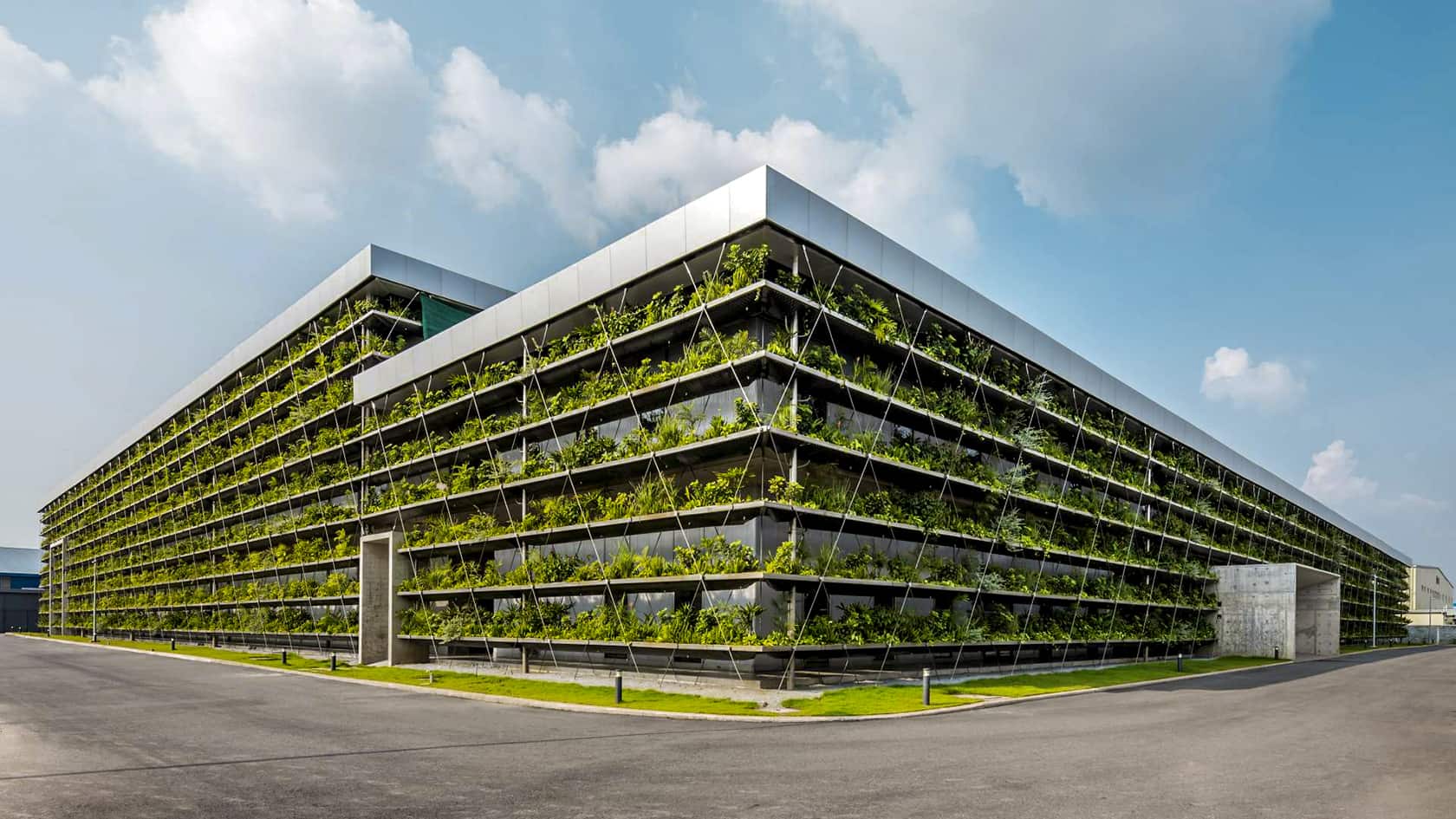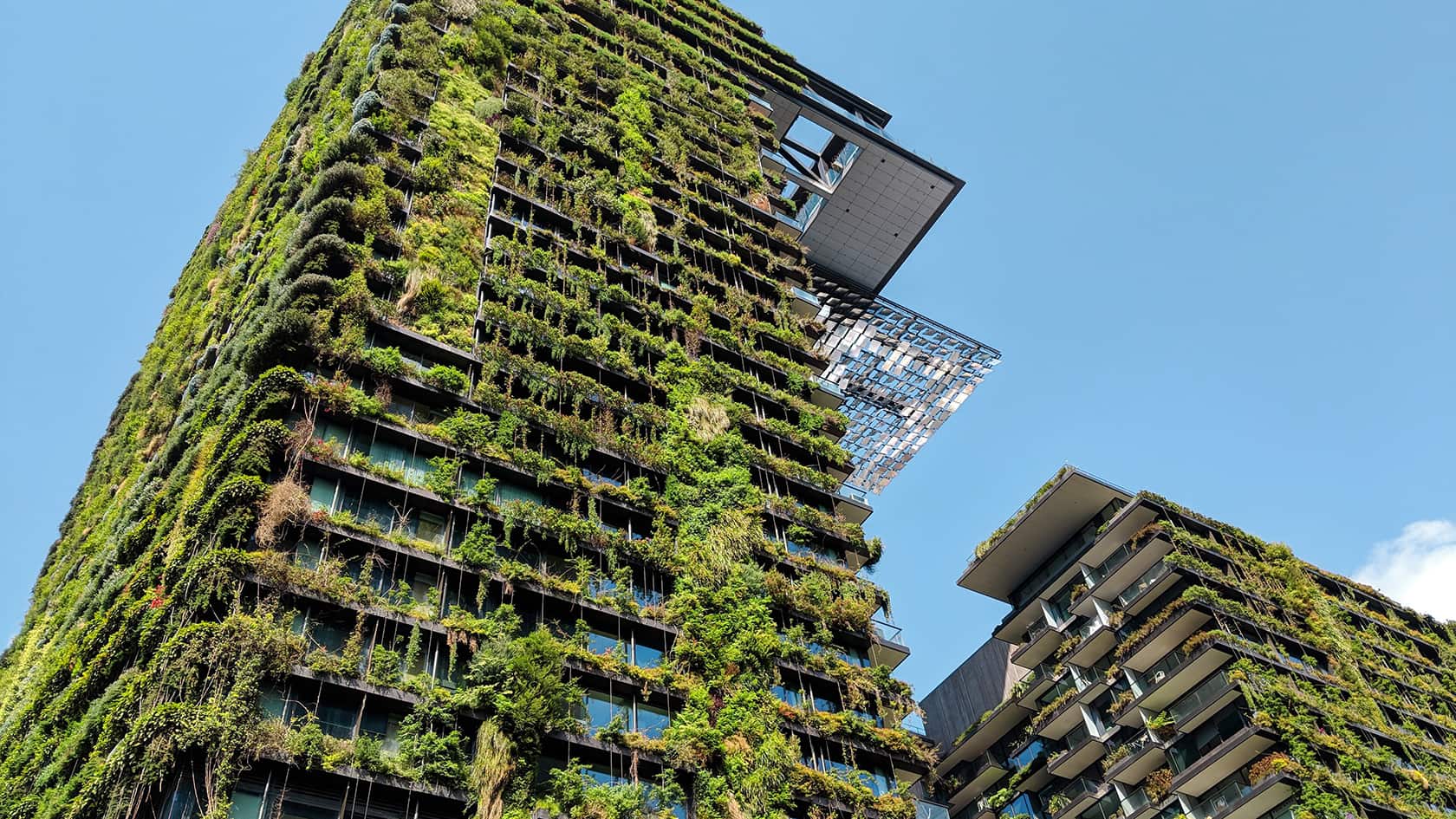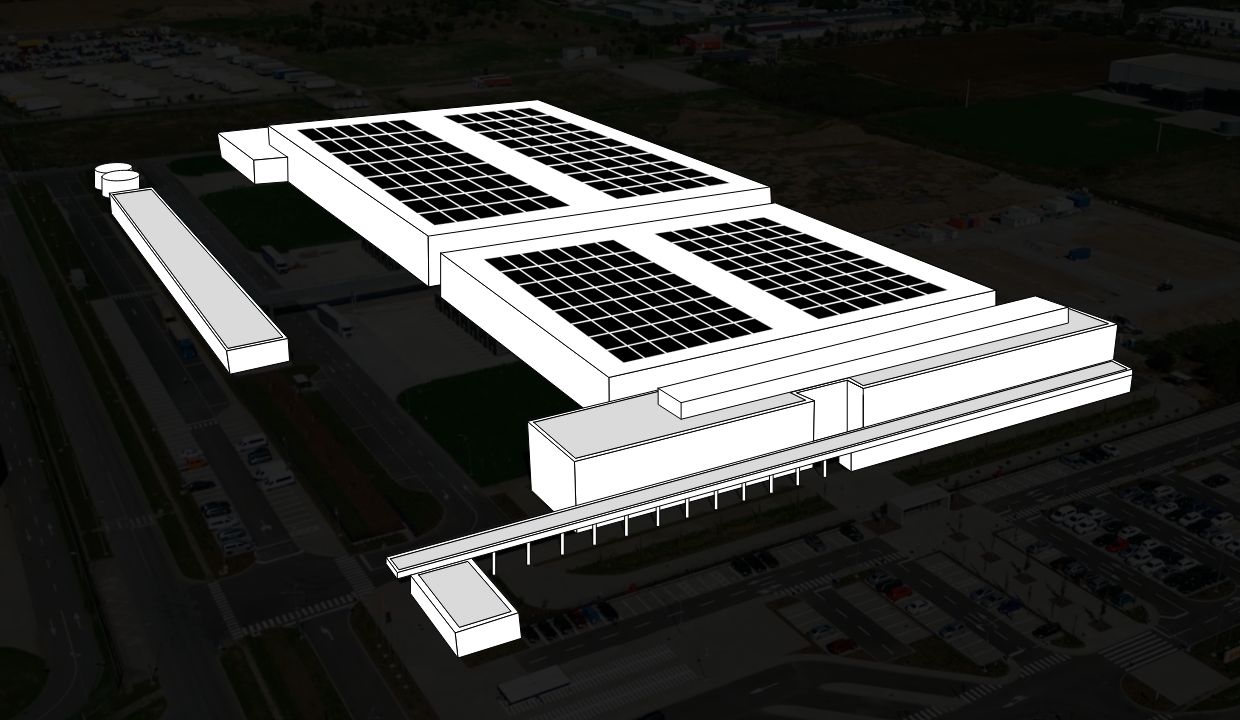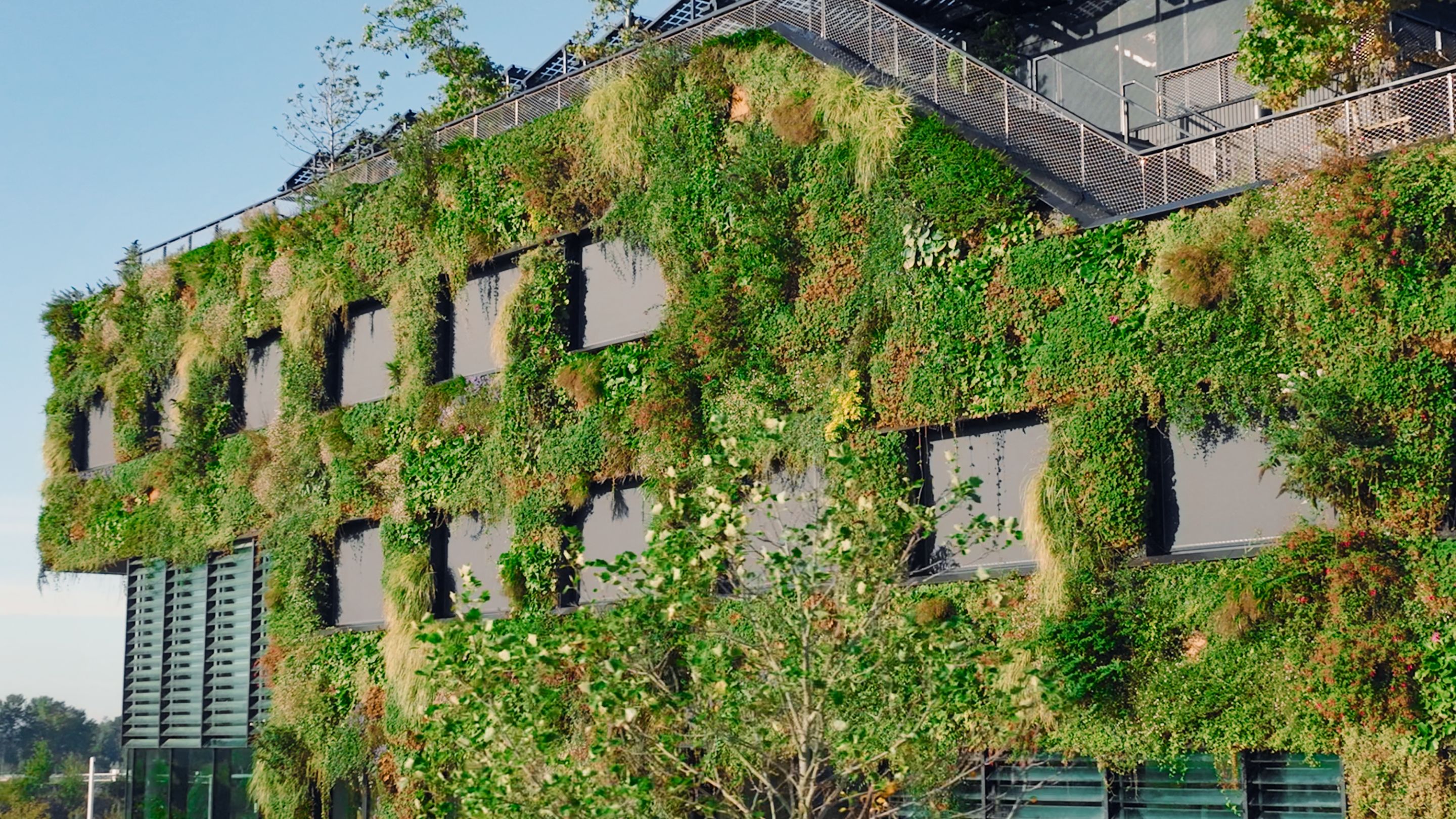
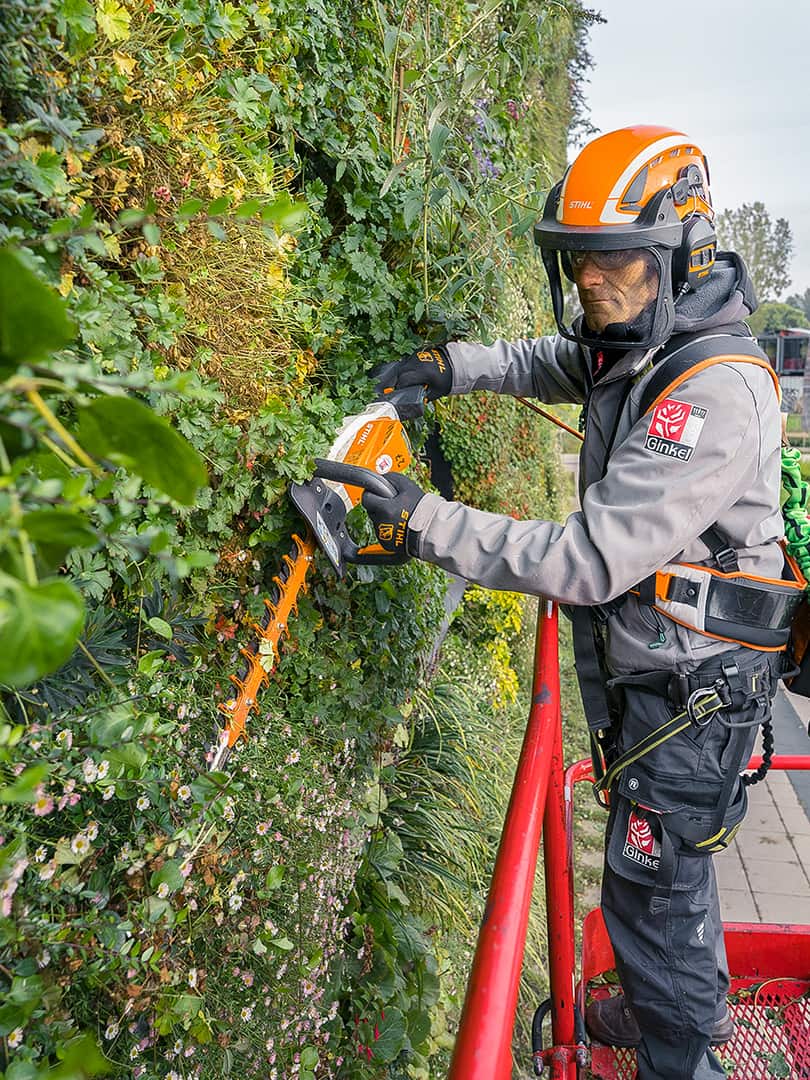
Szene 1: Die begrünte Fassade eines modernen Gebäudes. Szene 2: Ein Mann legt Schutzausrüstung von STIHL an. Szene 3: Von einem Hubsteiger aus wird eine begrünte Fassade mit einem Heckenschneider beschnitten. Szene 4 zeigt ein mit Photovoltaik bedecktes Dach. Szene 5: Eine Person stutzt die Dachbegrünung mit dem Freischneider.

The future is rooted
in the details

Sustainability Innovation

It is one thing to green the facade of a building with plants; making sure that this idyll keeps growing and thriving in the long term is another task entirely. We pay a visit to one of the greenest buildings in the Netherlands.

A growing facade

Even from a distance, Aeres University of Applied Sciences blends almost seamlessly into the landscape on the shore of Lake Weerwater. It is only as you get closer that you can see how the building itself has become a piece of nature: The facade is not a static element, but an ecosystem of thousands of plants that provide shade, regulate temperature, and create habitats.

It should be no surprise that this university has turned to innovative solutions, as those studying here are thinking every day about climate change adaptation, sustainability, the circular economy, and health. As such it makes perfect sense that the architecture of the building itself also makes these topics tangible.

60,000
Liters of rainwater are stored on the roof.
400
Solar panels are installed on the roof.
12,000
Plants are growing on the facade.

Designed as a holistic concept

An interdisciplinary team was involved from the start of building planning, including employees of the landscaping company Ginkel Groep, which has plenty of experience in greening roofs and facades. The designers of the roof had to account for the weight of six trees, 2,000 plants (including soil), 400 solar panels, and a reservoir for 60,000 liters of rainwater.

The building shell itself is made of steel, with a recyclable biocomposite facade. The plants for the facade were pregrown in special modules at a tree nursery and were then clicked into the supporting structure. The exterior of the building very quickly became wrapped in a dense layer of green.

A gardener on a rooftop garden uses a long pole pruner to trim a tree next to a staircase under a clear sky.

Maintaining the green walls

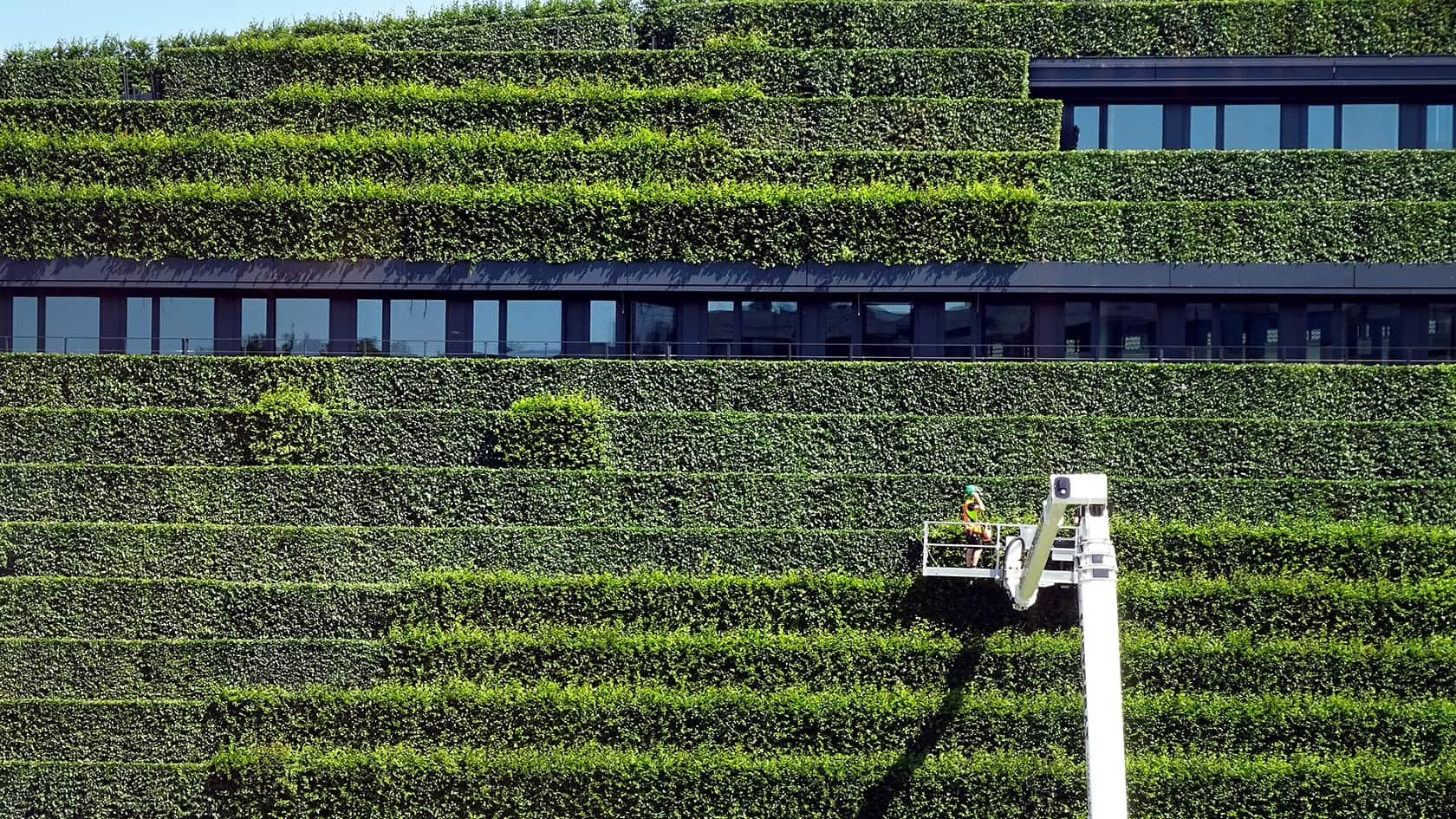
Four times a year, the Ginkel Groep maintenance team gets to work with an aerial platform. Team leader Gert Jansen is one of them. With skilled hands, he trims back protrusions, keeps windows clear, and ensures that the 12,000 plants on the facade stay healthy, relying on STIHL hedge trimmers and clearing saws to do so. Three charged batteries are enough to get him through a full workday.

The plants selected – including geraniums, ivy, heuchera, and cotoneaster – ensure that the facade remains covered throughout the year and is not only beautiful to look at, but also serves as an air-conditioning system for the people inside the building. The green shell simultaneously provides habitats and food for insects and birds.

During each visit, Gert Jansen also checks the digital irrigation system in the university’s technical room. A total of 84,000 liters of rainwater is collected on the roof and underground, and directed to the plants. This is especially important for the vegetation on the facade, as these plants can store very little water and must be supplied continuously.

“Using quiet battery-powered tools means we don’t disturb the university’s teaching.”

Gert Jansen Team leader at Ginkel Groep
Portrait of Gert Jansen
2,400
Plants are growing indoors.

Tropical air filters

The sustainable approach continues inside the building, where 2,400 tropical and subtropical plants improve the indoor air quality and reduce noise levels in the high-ceilinged spaces. Marc de Jager, project manager at Ginkel Groep, helped select them: philodendrons, monsteras, and dracaenas. These are particularly good for cleaning the air and filtering out pollutants, he explains. And it has long been known that a view of greenery is calming and encourages concentration. When asked whether green buildings are the future, de Jager answers with conviction: “They are the present, and we are working to ensure that green buildings become green cities.”

“A green facade saves energy. It cools the building, and the sunlight never even reaches the walls.”

Marc de Jager Project manager for building greening at Ginkel Groep
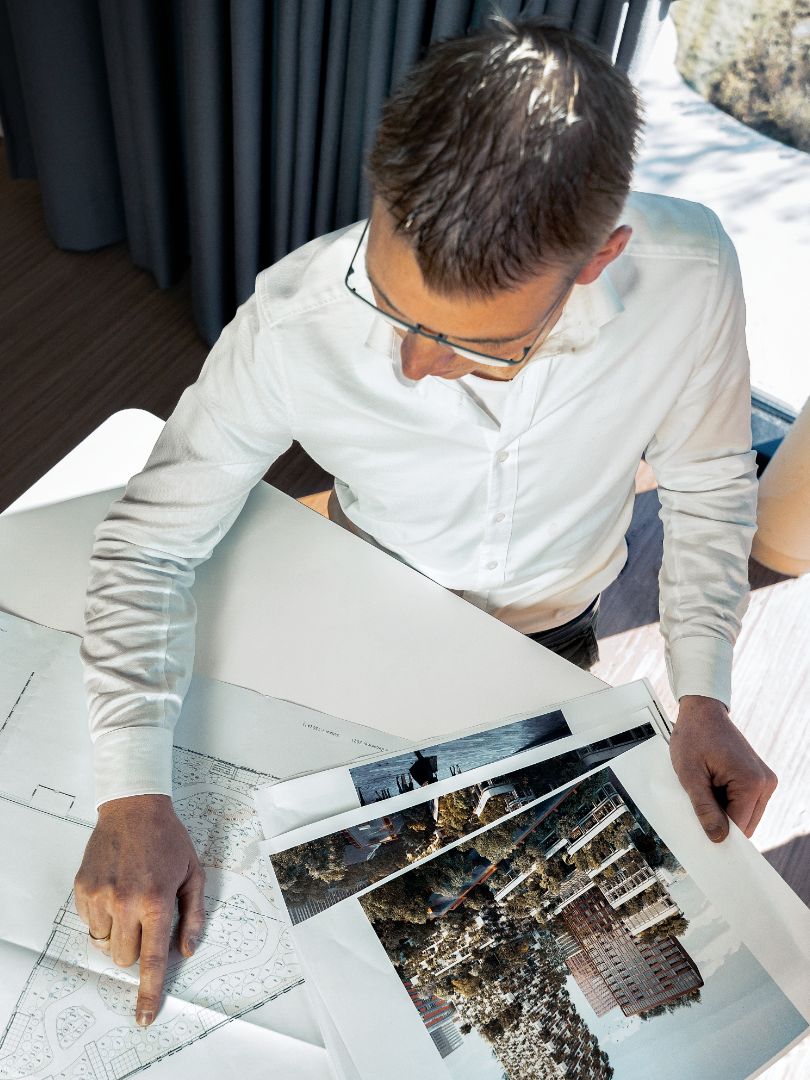
A planner at their desk reviews detailed architectural drawings and site plans along with visualizations of a project.

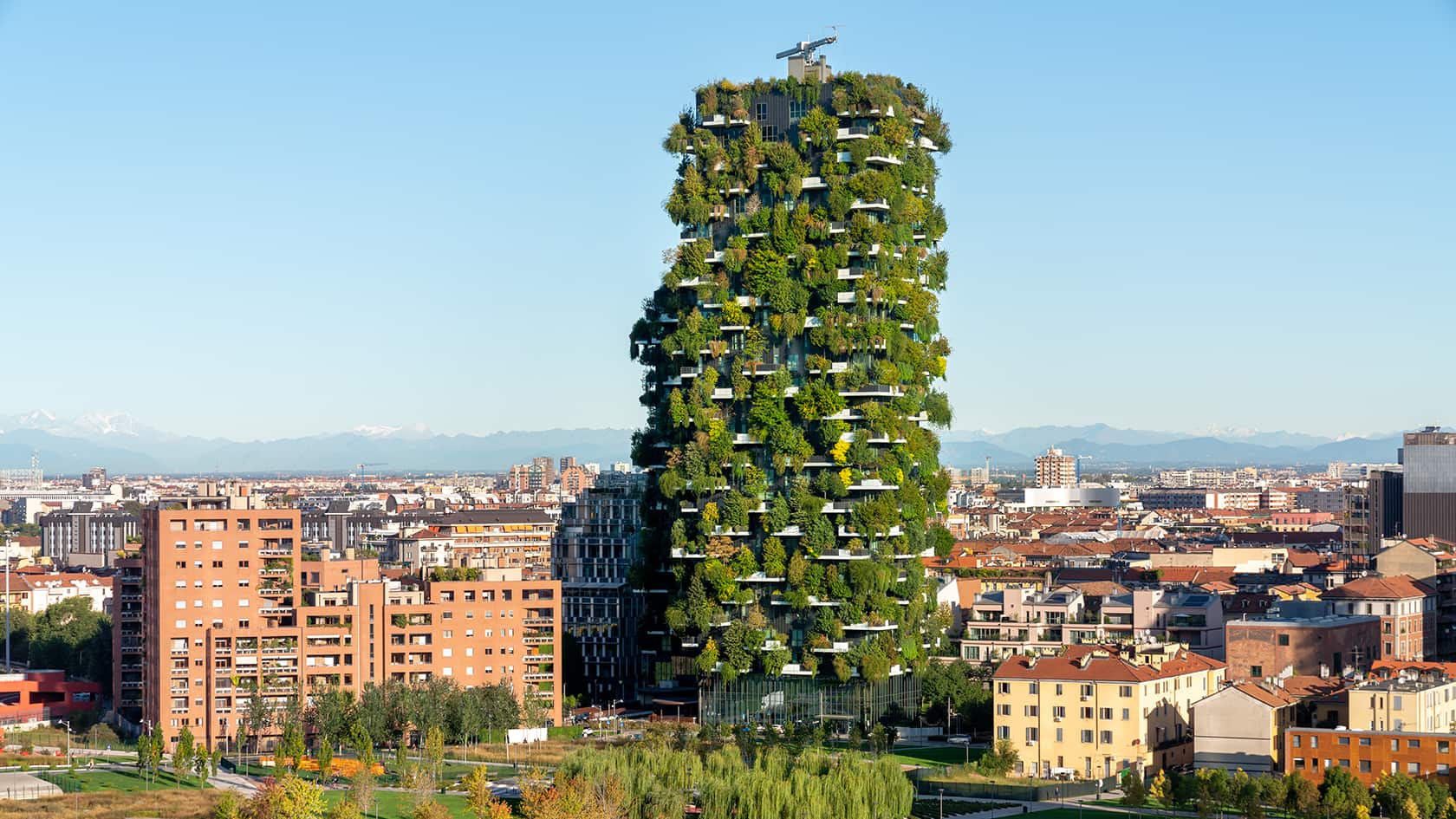
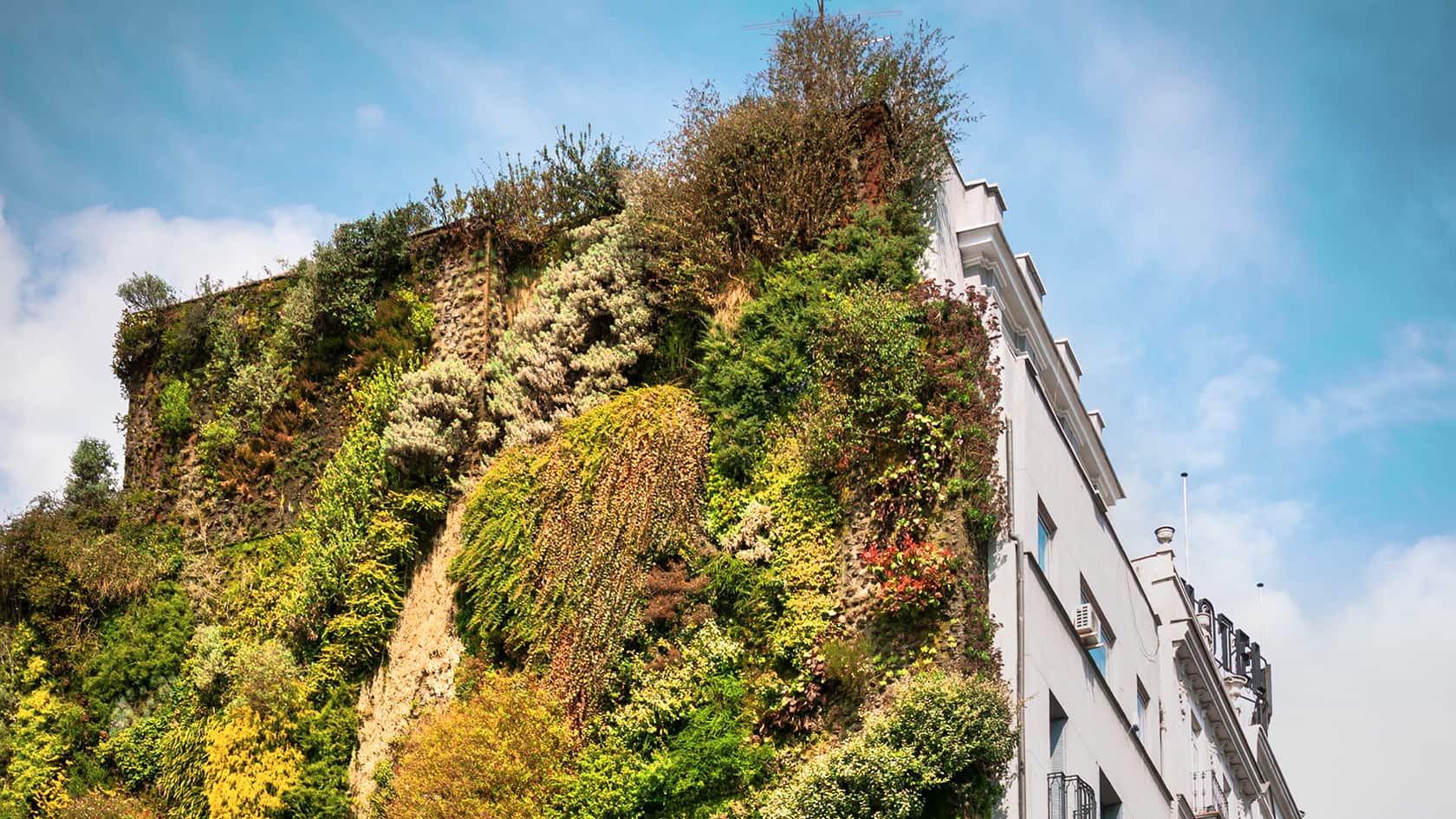
Some examples of green facades from around the world

Quiz

Select the correct answer.